
Unveiling the True Cost of 24-Hour Live-In Premium Private Nursing with VIPrivate Care

Introduction to Premium Live-In Care
For discerning clients, “live-in” means more than having a clinician on-site. It is a 24/7, concierge-caliber service led by seasoned RNs who manage complex needs, protect privacy, and coordinate every detail with precision. Understanding the 24-hour live-in private nursing cost starts with how this model is structured and why it differs from traditional home care.
Live-in can be delivered by one clinician residing in the home with scheduled rest periods, or by a rotating team covering continuous 12-hour or 8-hour shifts. For VIPs, VIPrivate Care often deploys two- or three-nurse rotations to ensure alertness, continuity, and rapid escalation when needs change.
What drives luxury home care pricing and private nursing rates:
- Clinical level: RN vs. LPN vs. nurse aide, and advanced competencies such as IV/IM therapies, biologics administration, complex wound care, ventilator or trach management, and post-op recovery.
- Acuity and scope: frequency of assessments, medication reconciliation, cardiac/neurologic monitoring, pain protocols, and care coordination with surgeons or specialists.
- Scheduling intensity: exclusive assignment, short-notice starts, overnights, holidays, and extended runs that reduce handoffs.
- Team design: single live-in vs. 2–3 clinician rotation, dedicated night coverage, and built-in backup.
- Location and logistics: New York or New Jersey residences vs. domestic/international travel; live-in nurse expenses may include private accommodations, secure transport, and travel time.
- Privacy and security: NDAs, limited-access documentation, coordination with estate managers and security details.
- Enhancements: telehealth and telenursing touchpoints, home lab draws, pharmacy courier, and medical/vitamin infusions.
Example: A dignitary recovering from abdominal surgery in NYC may require a 14-day RN rotation with twice-daily IV antibiotics, drain care, and nightly monitoring, plus an RN Liaison orchestrating specialist visits and pharmacy. The elite nursing services cost would reflect a daily live-in retainer, clinical supplies and medications, and any add-ons like private driver logistics.
VIPrivate Care presents transparent, line-itemed proposals so clients see precisely how live-in nurse expenses align with the plan of care and desired level of discretion, readiness, and clinical depth.
Defining 24-Hour Live-In Nursing
Understanding the 24-hour live-in private nursing cost starts with clarity on the service model itself. Live-in means a dedicated nurse resides in the home, providing continuous oversight, hands-on clinical care, and immediate response, day and night. Unlike intermittent visits, the nurse is on premises for both planned interventions and unplanned needs, preserving safety and continuity for high-acuity or privacy-sensitive clients.
There are three common coverage structures:
- Live-in nurse (on premises with designated rest periods): ideal when overnight events are intermittent and rapid response is needed.
- Two 12-hour awake shifts (24/7): appropriate for continuous monitoring, complex equipment, or frequent overnight care.
- Rotating live-in team (e.g., 3–4 days on/off): maintains continuity while preventing fatigue during extended engagements.
What a premium live-in assignment typically includes:
- Ongoing clinical assessment, vitals monitoring, and documentation
- Medication administration and reconciliation; controlled substance protocols
- Advanced skills as indicated: IV antibiotics, hydration, vitamin infusions, biologics, wound/ostomy care, post-operative recovery, catheter and trach care
- Care coordination with physicians and hospitals; RN liaison communication
- Safety, fall prevention, and mobility support; nutrition and hydration oversight
- Discreet household integration and travel-readiness for domestic or international moves
- Telehealth/telenursing touchpoints and escalation pathways
What drives private nursing rates and luxury home care pricing:
- Clinician level and specialty (RN, critical care RN, NP, multilingual, pediatric, oncology)
- Patient acuity and technology (infusions, pumps, ventilatory support, monitoring)
- Schedule intensity (awake overnights vs. traditional live-in), duration, and urgency
- Location, travel logistics, and accommodations for the nurse (private room, secure workspace)
- Security, confidentiality, and clearance requirements (NDAs, protective details)
- Ancillary needs: lab draws, pharmacy coordination, durable medical equipment
Example: A post-operative principal requiring q8h IV antibiotics, q4h vitals, ambulation support, and a weekend transfer to the Hamptons may warrant a rotating team of live-in RNs, secure medication handling, travel-day coverage, and per diem meals—factors that collectively shape elite nursing services cost and live-in nurse expenses. Aligning the care model to the clinical reality is the first step to an accurate 24-hour live-in private nursing cost.
Key Factors Influencing Service Costs
The 24-hour live-in private nursing cost is driven by clinical complexity, staffing model, and logistics tailored to a VIP lifestyle. Understanding these elements clarifies why private nursing rates vary across cases.
Clinical acuity
- Monitoring-only cases (e.g., uncomplicated post-operative recovery) require fewer interventions than complex cases involving central lines, ventilators, wound vacs, IV antibiotics, or biologics.
- Specialty skills (CCRN, oncology, cardiac, pediatric, or neonatal experience) and continuous medication titration increase elite nursing services cost.
Credentials and scope
- RN vs LPN vs nurse practitioner coverage affects responsibilities and pricing.
- Added skills—ultrasound-guided IV placement, management of TPN, or infusion therapy—raise luxury home care pricing due to expertise and risk profile.
Staffing model
- True live-in care typically includes designated sleep time and on-site accommodations provided by the client, influencing live-in nurse expenses.
- Continuous 24/7 awake coverage often requires two or three clinicians rotating 12-hour shifts, increasing total cost compared to one live-in nurse.
Scheduling and availability
- Same-day activation, after-hours starts, minimum engagement durations, holidays, and extended shifts carry premiums due to rapid mobilization and overtime exposure.
- Continuity requests (e.g., the same RN for all shifts) may require reserved staffing and rate adjustments.
Location and logistics
- Service in Manhattan, the Hamptons, or remote estates can add travel time, tolls, parking, and access coordination.
- Domestic and international travel care includes airfare, accommodations, per diem, credentialing, and security integration with executive protection teams.
Therapies and equipment
- On-site medical and vitamin infusions, specialty biologics, cold-chain handling, infusion pumps, cardiac telemetry, and remote monitoring devices influence costs and setup.
Privacy and risk management
- Discreet staffing, NDAs, enhanced background checks, and HIPAA-secure communication are integral to VIP care and reflected in rates.
Care coordination
- RN Liaison oversight, care planning, physician collaboration, and telehealth/telenursing support streamline complex cases and can offset downstream costs.
Example: A post-op client needing sleep-time live-in RN support will be priced differently than an oncology patient requiring 24/7 awake RNs for infusion management and frequent assessments, or an executive requesting a five-day international trip with bedside RN, equipment, and secure logistics.
Nurse Expertise and Specialization Impact
The caliber of the clinician at the bedside is one of the strongest drivers of 24-hour live-in private nursing cost. Beyond years of experience, subspecialty training, certifications, and exposure to high-acuity cases all influence private nursing rates because they reduce clinical risk and enable more complex care to be delivered safely at home.

Examples of skill sets that carry premium pricing:
- Critical care (CCRN): For tracheostomy/ventilator management, frequent neuro checks after stroke, LVAD oversight, or complex post–cardiac surgery recovery. Scarcity of ICU-trained RNs pushes elite nursing services cost higher, especially for awake-overnight coverage.
- Infusion therapy (CRNI): For central line/port care, biologics, IV antibiotics, or TPN. These nurses manage sterile technique, infusion reactions, supply coordination, and pharmacy communication—factors that increase live-in nurse expenses.
- Wound and ostomy (WOCN): For negative-pressure wound therapy, complex grafts, or fistula care. Precision dressing protocols add time and expertise not reflected in generalist luxury home care pricing.
- Oncology (OCN): For symptom management, hydration, growth factor support, and port access. Handling immunotherapies and high-risk side effects warrants seasoned oncology nurses.
- Pediatrics (PALS) or high-risk maternal-newborn: For trach/vent children, seizure disorders, or fragile neonates. Pediatric private duty capacity is limited, elevating private nursing rates.
- Palliative and complex pain: For titration of analgesics, non-pharmacologic comfort measures, and family coaching. Advanced assessment skills reduce ER transfers—a value reflected in pricing.
- Travel and medical escort: For domestic or international movements, aviation medicine considerations, and contingency planning. Travel days, standby hours, and logistics coordination add to elite nursing services cost.
Assignment design matters too. Some cases can use a single live-in RN with rest periods; ventilator or fresh post-op cases often require two awake 12-hour RNs. The difference in skill mix and staffing pattern can shift the overall 24-hour live-in private nursing cost far more than geography alone.
With VIPrivate Care, RN Liaisons review the clinical picture and match subspecialty credentials precisely, preventing under-qualification that risks safety—or over-qualification that inflates cost without added benefit.
Scope of Services and Care Complexity
The 24-hour live-in private nursing cost is driven first by clinical acuity. Higher-complexity cases require RNs with specialty credentials and advanced skills, which raises private nursing rates compared with supportive care delivered by an LPN or caregiver.
Key cost drivers include:
- Acuity and licensure: Ventilator or tracheostomy care, TPN via central line, IV antibiotics, biologics, complex wound vacs, and post-op management demand an RN and often specific certifications. Lower-acuity needs—medication management, mobility support, fall prevention—may allow mixed staffing models.
- Overnight structure: “Live-in” models where a nurse can rest at night differ from 24/7 “awake” coverage. High-risk cases (e.g., unstable airways, seizure disorders) often require two rotating 12-hour RNs. This changes luxury home care pricing significantly.
- Infusions and biologics: At-home infusion programs add pharmacy coordination, cold-chain handling, sterile supplies, infusion pumps, and RN monitoring time—important contributors to elite nursing services cost.
- Staffing configuration: One-to-one care is standard, but lifts, behavioral risks, or post-operative fall risk may necessitate two-person teams during certain windows. Continuity planning, relief coverage, and rapid replacement capability also influence live-in nurse expenses.
- Care coordination: VIP Patient Memberships with an RN Liaison add proactive care planning, specialist coordination, expedited diagnostics, and 24/7 clinical oversight. These services enhance outcomes and predictability but are reflected in private nursing rates.
- Travel and remote support: Domestic or international travel care includes standby hours, travel days, accommodations, medical clearances, equipment logistics, and coordination with security or aviation teams.
Examples:
- A post-op executive recovering from orthopedic surgery may need an RN days with medication reconciliation and mobility coaching, transitioning to lighter overnight supervision as risk declines.
- An oncology VIP on biologic infusions with a central line may require two 12-hour RNs, infusion oversight, sterile supply management, and frequent telehealth consults.
- A dignitary flying internationally with cardiac risk may need a flight-experienced RN, in-transit monitoring, destination setup, and contingency planning—factors that affect luxury home care pricing.
Accurate estimates hinge on a detailed assessment. VIPrivate Care aligns scope, team composition, and logistics to your medical profile to determine an appropriate, transparent 24-hour live-in private nursing cost.
Geographic Considerations and Travel Care
Where you receive care—and where you’re going next—directly influences the 24-hour live-in private nursing cost. In dense urban areas like Manhattan, higher clinician wages, building access requirements, and logistics (secure parking, elevator scheduling, concierge coordination) can elevate private nursing rates. Suburban New Jersey may offer slightly more favorable luxury home care pricing due to easier access and lower overhead, while seasonal destinations (e.g., the Hamptons) often see premium adjustments tied to demand and accommodation availability.
Jurisdictional rules also shape live-in nurse expenses. Local labor laws, building insurance requirements, and the need for additional credentials (immunizations, trainings, or background checks for high-security residences) can add to elite nursing services cost. For clients in landmark properties or high-security environments, additional compliance and documentation may be necessary, impacting lead time and budget.
For travel care, VIPrivate Care prices transparently with a clinical base plus logistics. Typical line items include:
- 24-hour live-in clinical day rate based on acuity and specialty (ICU, oncology, infusion)
- Travel days and on-duty transit time
- Air/ground transportation (commercial or private), baggage for medical equipment
- Lodging or client-provided accommodations with a private room
- Per diem for meals and incidentals
- Visas, vaccinations, and international insurance extensions (as applicable)
- Secure medical supply procurement and cold-chain handling for biologics
Concrete examples:
- Manhattan to the Hamptons (summer): Base live-in rate plus housing for the nurse if not provided, vehicle/fuel/tolls, and potential surge pricing due to seasonal demand.
- Weeklong international trip (e.g., London or Dubai): Live-in day rate, business-class airfare per clinician (per client preference), hotel near the client’s residence, per diem, equipment courier fees, and documentation costs (visas, certifications).
- Multi-state road itinerary: Base rate, travel-day billing between stops, overnight lodging in secure accommodations, and contingency hours for traffic or weather.
Your RN Liaison maps the entire itinerary in advance, aligns the clinical team to your schedule, and delivers a detailed estimate so luxury home care pricing remains predictable—even across borders.
Value of VIPrivate Care’s Premium Model
When evaluating the 24-hour live-in private nursing cost, the true value lies in what’s included beyond bedside hours. VIPrivate Care’s premium model integrates high-acuity clinical skill, proactive oversight, and seamless logistics designed around VIP lifestyles and security.
What’s typically encompassed:
- RN Liaison membership: dedicated case management, personalized care plans, rapid triage via telehealth/telenursing, and coordination with surgeons, concierge physicians, and elite hospitals.
- Premium private nursing: ICU/CCU-caliber RNs/LPNs matched to acuity; complex wound care, central line/port care, TPN, biologic injections, and IV vitamin/medical infusions; trending of vitals and symptoms with discreet at-home monitoring (e.g., pulse oximetry, glucose).
- Travel and remote coverage: domestic and international nurse accompaniment; coordination for jets, yachts, and remote villas; cold-chain handling for biologics and infusions.
- Discretion and security: rigorous vetting, NDAs, minimal rotating team for continuity, and elevated infection-control protocols appropriate for principals and dignitaries.
- Lifestyle integration: coordination with household staff and chefs for therapeutic diets, calendar management around meetings and events, and on-site collaboration with PT/OT partners.
This bundled, outcomes-focused approach can mitigate downstream costs that don’t show up in simple private nursing rates. Example: a post-operative executive with cardiac risk factors developed early fluid imbalance; the live-in RN identified subtle weight and O2 changes overnight, arranged same-day IV diuretics and labs at home, and averted an ER visit and admission—an event that would have exceeded several days of live-in nurse expenses. Another client receiving biologics avoided repeated infusion-center trips, minimizing exposure and schedule disruption while maintaining clinical oversight at home and during travel.
Luxury home care pricing for this level of readiness and capability is higher than standard agencies, but VIPrivate Care’s clarity on scope helps avoid piecemeal add-ons that inflate elite nursing services cost. Estimates delineate live-in nurse expenses, specialized supplies, and any travel-related elements up front, so families understand the full 24-hour live-in private nursing cost relative to the safety, access, and continuity it delivers.
Exclusive Membership Benefits and Pricing
Membership with VIPrivate Care is designed for clients who expect concierge-level coordination and clinical excellence. Each member is paired with a dedicated RN Liaison who orchestrates care plans, hand-selects nurses by subspecialty (e.g., cardiac, oncology, post‑operative), and remains on call to adapt the team as needs evolve—at home, in hotels, or during international travel.
What you receive as a member:
- Priority access to 12‑ and 24‑hour staffing, including true live‑in options
- A single point of contact (RN Liaison) for medical oversight and rapid problem solving
- Discreet coordination with your physicians, security, building management, and family office
- Integrated telehealth/telenursing check‑ins and symptom monitoring between visits
- Access to in‑home medical and vitamin infusions and biologics administration
- Continuity of the same vetted nurses wherever you are—domestic or abroad
- Streamlined, confidential billing and documentation
The 24-hour live-in private nursing cost is quoted individually to reflect clinical complexity and the caliber of the nurse required. Private nursing rates are influenced by:
- Credentials and scope: RN vs. LPN, critical‑care background, infusion competencies
- Care model: two 12‑hour shifts versus a single live‑in nurse with designated rest periods
- Location and logistics: NYC, Hamptons, or international sites; travel time, lodging, per diem
- Acuity and tasks: wound care, IV/biologic therapy, telemetry, post‑op protocols
- Scheduling: short notice, holiday differentials, extended shifts
- Security and privacy requirements: NDAs, coordination with protection teams
Example: A two‑week post‑operative plan in Manhattan may pair a day‑shift RN for drain management and medication titration with a night‑shift LPN for monitoring and comfort care. If the client flies to a second home mid‑episode, the same RN can travel, with live‑in nurse expenses (flight, lodging/per diem) itemized. Infusion drugs are typically billed separately from nursing time. Members receive preferred luxury home care pricing and faster placement compared with ad‑hoc requests.
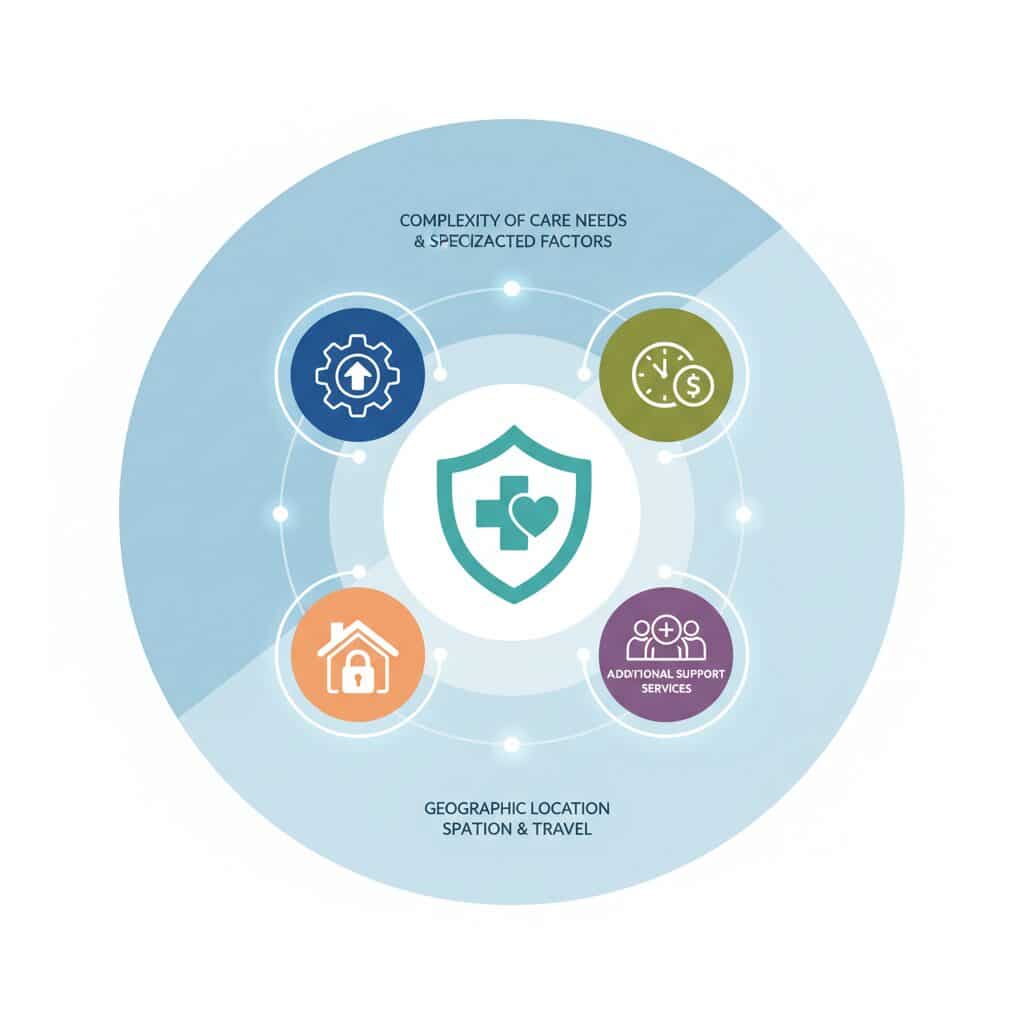
Every proposal details the elite nursing services cost line by line—base hours, differentials, travel, and pass‑through supplies—so you can approve precisely what’s needed with no surprises.
Navigating Payment Options and Transparency
Understanding how you’ll pay—and for exactly what—is essential when evaluating the 24-hour live-in private nursing cost. VIPrivate Care begins with a comprehensive intake and a written proposal that outlines scope, staffing model, and all associated fees so there are no surprises.
Private nursing rates are tailored to clinical needs and logistics. Pricing reflects:
- Licensure and expertise required (RN vs. LPN/LVN) and case complexity
- Single live-in clinician vs. rotating team for 24/7 continuity
- Location (NYC, the Hamptons, North Jersey), building access, and security protocols
- Duration (short-term post-op vs. extended assignment)
- Holiday or rush-start scheduling, and after-hours coverage
- Add-on services such as vitamin/medical infusions or biologics
What’s typically included in luxury home care pricing:
- RN Liaison oversight, care planning, and family/physician coordination
- Scheduling, credentialing, and continuity management
- Daily clinical documentation and secure updates
- Standard nursing equipment brought by the clinician (stethoscope, vitals kit)
What may be billed in addition, depending on your needs:
- Live-in nurse expenses such as travel to secondary residences, ground transfers, and lodging for remote stays
- Holiday premiums or extended-hour surges
- Specialized supplies, pharmacy, infusion medications, or biologics
- Ancillary clinicians (e.g., second nurse for high-acuity turns) or private-duty aides
- International travel support (visas, insurance riders)
Payment options are streamlined for family offices and principals: ACH/wire, major credit cards, and retainer-based prepayment for rapid deployment. Invoices are itemized by clinician, shift, and expense category, with real-time timesheets and RN Liaison notes for transparency. Many clients opt for VIP Patient Memberships, which can reduce ad hoc coordination fees and provide priority access and 24/7 clinical navigation.
Insurance varies. While elite nursing services cost is often private-pay, VIPrivate Care can furnish superbills for out-of-network reimbursement, coordinate with long-term care policies, and align invoicing to trusts, HSAs/FSAs, or corporate entities.
Example scenarios:
- One-week Manhattan post-operative live-in RN: single clinician, daily rate, potential weekend/holiday premium, infusion supplies if ordered.
- Two-week European travel case: per-diem nursing rate plus airfare in business class, secure lodging arrangements, and compliant international medical coverage billed at cost.
How to Request a Personalized Quote
Begin with a confidential consult. Contact VIPrivate Care to outline your needs and timeline. Our concierge team will coordinate a swift intake and pair you with an RN Liaison who manages every step—from assessment to staffing and ongoing oversight.
To accelerate your personalized quote, have the following details ready:
- Location(s) and residence logistics: address, building access, private room for a live-in clinician, security requirements.
- Start date, duration, and urgency (same-day, planned post-op, or ongoing).
- Clinical profile: diagnoses, surgeon/physician orders, medication lists, wound or infusion needs, mobility status, and any biologics or vitamin infusions.
- Level of care: RN live-in, two 12-hour RNs for continuous awake care, or a blended plan with specialized skills (e.g., infusion-certified RN).
- Lifestyle and privacy preferences: NDAs, vaccination requirements, language preferences, travel companions, or executive schedule constraints.
- Travel itinerary (if applicable): domestic/international legs, accommodations, and security coordination.
- Equipment and supplies: hospital bed, monitors, DME procurement, and pharmacy preferences.
What happens next:
- Clinical assessment: Your RN Liaison conducts a virtual or in-person review, confers with your physicians, and defines scope and safety protocols.
- Proposal: You’ll receive a transparent breakdown of your 24-hour live-in private nursing cost, including:
– Private nursing rates by clinician level (RN vs. LPN), and whether care is live-in or two 12-hour shifts.
– Live-in nurse expenses (room/board), travel and per diem for remote or international assignments.
– Holiday or rapid-response premiums, care coordination, telehealth/telenursing, and concierge oversight.
– Optional services: medical and vitamin infusions, biologics management, and companion staffing.
- Example: For a two-week post-op recovery in Manhattan, we may present two options—one RN live-in supported by telehealth nights vs. two 12-hour RNs for continuous awake coverage—so you can compare luxury home care pricing and elite nursing services cost line by line.
Next steps:
- Approve the plan, submit the retainer to secure your team, and receive an onboarding timeline (often within 24–72 hours; faster for urgent cases).
- Choose billing preferences (weekly or per engagement) and ongoing reporting cadence.
- Your RN Liaison remains your single point of contact to adjust staffing and expenses as needs evolve.
Investing in Elite, Discreet Home Healthcare
For discerning clients, the 24-hour live-in private nursing cost reflects more than continuous bedside care—it encompasses clinical sophistication, privacy safeguards, and executive-level coordination. At VIPrivate Care, luxury home care pricing is shaped by a tailored nursing plan, the caliber of the clinical team, and the logistics required to protect your time and confidentiality.
Key factors that influence private nursing rates and live-in nurse expenses:
- Care model: A true live-in nurse (on-site 24 hours with designated rest periods) is typically billed at a day rate, while 12-hour rotations (two RNs per day) are billed hourly and command higher cumulative costs for continuous alert coverage.
- Clinical complexity: Specialized needs—post-surgical management, total parenteral nutrition, ventilator care, wound vacs, infusion therapy, or biologics administration—require advanced credentials and raise elite nursing services cost.
- RN Liaison oversight: VIP Patient Memberships with a dedicated RN Liaison provide clinical governance, rapid escalation pathways, and care orchestration with physicians, often reflected as a membership or retainer component.
- Staffing configuration: Single live-in vs two-nurse rotations, same-gender requests, language proficiency, and short-notice start-ups can affect pricing.
- Scheduling premiums: Nights, weekends, holidays, and extended shifts beyond standard duty may carry differentials.
- Travel and mobility: Domestic or international assignments add per-diem, airfare, lodging, medical baggage handling, and coordination with security teams. Telehealth and telenursing may supplement or reduce on-site hours.
- Supplies and therapies: Medical equipment, disposables, specialty drugs, and temperature-controlled handling for biologics are itemized based on the patient’s protocol.
Example: An executive recovering from orthopedic surgery may opt for a two-week live-in RN with daytime mobilization therapy, evening pain management, and on-call telehealth. If a biologic or vitamin infusion is added twice weekly, an infusion-certified RN and cold-chain delivery are arranged, with associated clinical and logistics fees.
Investing at this level delivers continuity, reduced readmission risk, and discretion—care that moves seamlessly from townhouse to jet to hotel suite without compromising safety or privacy.


