Why Seamless Nursing Handoffs Matter for Continuity of Elite Home Care
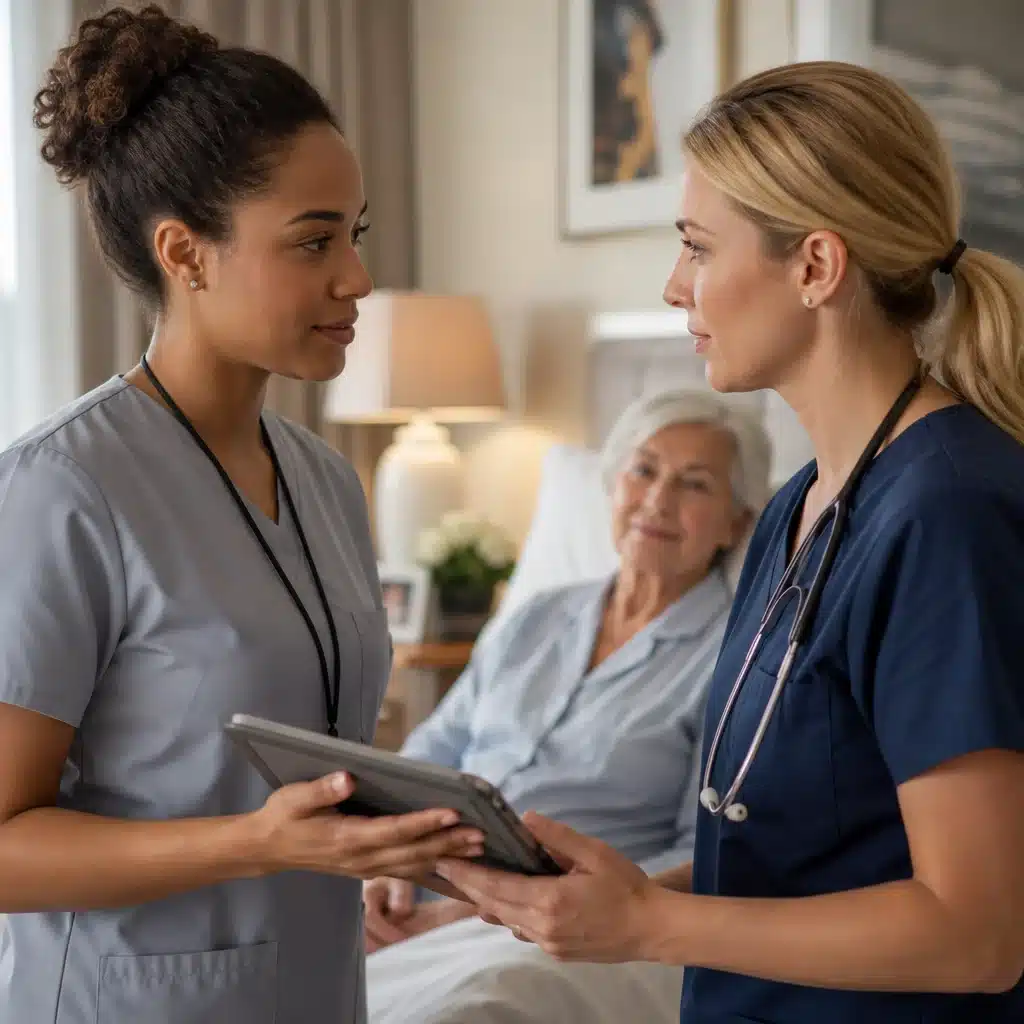
Table of Contents
- The Hidden Risks of Fragmented Care in Private Nursing
- Why Continuity Matters for Your Health Outcomes
- How We Structure Handoffs Across Our Care Team
- Our RN Liaison System Ensures Consistent Care Standards
- Communication Protocols That Protect Your Privacy and Safety
- 24/7 and Live-In Care With Built-In Continuity
- Travel Care Without Compromising Your Care Plan
- Technology Integration for Seamless Information Transfer
- Training Our Team for Excellence in Care Transitions
- Your Dedicated Care Coordinator Role in Every Handoff
- Building Trust Through Transparent Care Documentation
- Experience the Difference Elite Nursing Continuity Provides
- Frequently Asked Questions (FAQ)
The Hidden Risks of Fragmented Care in Private Nursing
When you or a loved one receives private home nursing care, what happens during the transition between caregivers matters profoundly. A nurse who understands your medical history, preferences, and specific needs hands off to someone unfamiliar with these details—and critical information can slip through the cracks. At VIPrivate Care, we recognize that seamless nursing handoffs are not administrative checkboxes; they are the foundation of safe, effective, and truly personalized care.
This article explores why continuity of care through structured handoff protocols is essential for your health outcomes, how we design these transitions, and what sets elite private nursing apart from fragmented care models.
Fragmented care occurs when nurses or care teams lack clear communication channels, shared clinical records, or standardized handoff procedures. The consequences are real and potentially serious.
When a care transition happens without detailed information transfer, medication timing can be miscalculated, recent symptom changes may go unnoticed, and your preferences regarding comfort care or family involvement may be overlooked. A nurse arriving for a 12-hour shift who doesn’t know that you experienced chest discomfort the previous evening or that your attending physician requested specific monitoring has lost crucial context. This gap becomes particularly dangerous if you’re managing multiple conditions or recently adjusted medications.
Beyond clinical safety, fragmented handoffs erode the personalized experience you’ve sought through private care. You may find yourself repeatedly explaining your preferences, your family’s concerns, or your daily routines to different caregivers. This repetition is frustrating and undermines the trust and efficiency that private nursing is meant to provide.
Practical takeaway: Before engaging any private nursing service, ask specifically how they structure nurse-to-nurse communication and what information is documented and transferred at each shift change. Request examples of their handoff process in writing.
Why Continuity Matters for Your Health Outcomes
Clinical continuity of care directly influences your health and recovery. Research in nursing and primary care consistently demonstrates that when patients experience consistent, coordinated care with clear communication between providers, they experience better outcomes, fewer preventable complications, and higher satisfaction.
For you as an individual receiving elite home care, continuity means your nurse knows your baseline. If you typically have a resting heart rate of 58 and it rises to 72, she notices and escalates appropriately. If your pain pattern changes, she recognizes the shift immediately rather than starting from zero. This intimate knowledge of your normal state enables early detection of changes that might otherwise be missed.
Continuity also strengthens adherence to your care plan. When every nurse implements the same protocols consistently—the same timing for mobility exercises, the same approach to wound care, the same monitoring intervals—your body and mind adapt to predictability. You develop confidence in the routine and in the team.
Additionally, continuous care relationships allow nurses to refine their approach based on what works best for you specifically. One patient may prefer morning medication administration with breakfast; another needs evening dosing due to side effects. Over time, with continuity, these personalized details become embedded in how your care unfolds, rather than being lost each time a new face appears.
Actionable takeaway: When discussing your care plan with your nursing team, prioritize discussing which aspects of your daily routine are most important to maintain consistently. Make these preferences explicit so they become part of every handoff.
How We Structure Handoffs Across Our Care Team
We design our handoff structure around two core principles: comprehensiveness and consistency.
When one nurse concludes a shift and another begins, we facilitate a structured overlap or detailed communication that includes:
- Current clinical status: vital signs, symptom review, and any changes since the last assessment
- Medication administration log and timing for upcoming doses
- Physician orders and any recent communication from your medical team
- Wound care details, mobility limitations, or specific monitoring parameters
- Your personal preferences, comfort measures, and family communication needs
- Documentation of any events, concerns, or observations that require follow-up
Our model ensures this information flows through multiple channels simultaneously. Written documentation in our secure system captures clinical details. A direct conversation between departing and arriving nurses allows for context and nuance that documentation alone cannot convey. Our care coordinator validates that key information has been understood and received.
For 12-hour and 24-hour care arrangements, we schedule overlaps whenever possible so nurses can brief each other directly in your presence. This transparency reinforces your confidence and allows you to clarify any preferences or concerns immediately.
Action step: Request a walk-through of how your first handoff will occur. Ask to meet both the initial nurse and the second nurse, if feasible, so everyone understands expectations from the outset.
Our RN Liaison System Ensures Consistent Care Standards
Our private RN liaison services provide a permanent clinical anchor across all your care transitions. Your dedicated RN Liaison is a senior registered nurse who knows your complete medical story, your family’s priorities, and your care objectives. She does not provide direct bedside care but instead supervises and coordinates all aspects of your care continuity.
This liaison reviews every handoff, ensures all nurses on your team are aligned on clinical protocols, and serves as the single point of contact between your care team and your physicians. If a new nurse is brought in, the liaison ensures she receives comprehensive orientation to your specific needs and history. If a clinical question arises, the liaison resolves it rather than leaving individual nurses to interpret ambiguous information.
The liaison also functions as an advocate within your care team, ensuring that your preferences and your family’s expectations are understood and honored consistently. This role transforms your private nursing arrangement from a collection of shifts into a coordinated system of care.
Next step: Confirm that your care agreement includes a dedicated RN Liaison assignment and that this person will be available for direct communication with you and your family.
Communication Protocols That Protect Your Privacy and Safety
Every handoff protocol we employ is designed with two priorities in mind: your clinical safety and your privacy.
All information transfer uses encrypted, HIPAA-compliant systems that restrict access to authorized team members and your designated family contacts. Nurses communicate via secure messaging and documentation platforms, never through personal text messages or unsecured email. Verbal handoffs occur in private settings where patient information is not overheard by household staff, family members (unless you request their involvement), or others.
We maintain strict protocols around what information is documented where. Your full medical history and sensitive details are available only to clinical staff with a direct need to know. Household staff or companions who may be present in your home receive only the information necessary for them to support your care safely (for example, assistance with mobility or meals) without being exposed to confidential clinical details.
Handoff communication also includes specific instructions about who in your family should receive what information and through what channels. If you prefer your adult children to know about your medication adjustments but your household manager should not, those boundaries are documented and enforced at every transition.
Actionable takeaway: Before your care begins, have a detailed conversation about your privacy preferences. Specify exactly which family members should receive updates, what clinical details you’re comfortable sharing, and which information remains strictly confidential.
24/7 and Live-In Care With Built-In Continuity
Our 24-hour and live-in care arrangements integrate seamless handoff continuity as a core feature, not an afterthought.
In a 24-hour care model where we provide continuous coverage across three 8-hour shifts or two 12-hour shifts, each transition happens within your home. The departing nurse briefs the incoming nurse in your presence or in a designated private space. This direct communication allows for real-time questions, clarifications, and ensures nothing slips through the gaps between shifts.
For live-in arrangements, we typically assign a primary nurse to your household with carefully planned backup coverage for days off and vacations. The primary nurse builds deep familiarity with your routines, your home environment, and your evolving needs. When backup coverage is needed, the primary nurse personally orients the backup nurse to your specific preferences and any recent changes in your condition or care plan.
Beyond the clinical handoff, continuous presence in your home means your care team understands the practical rhythms of your life: when you prefer meals, your sleep patterns, how your energy fluctuates throughout the day. This context allows your nurses to proactively support your comfort and well-being, not simply respond to medical needs.
Practical takeaway: If you’re considering live-in care, ask about the nurse continuity model. How many days per week will your primary nurse be present? How will backup coverage be managed? What training does every backup nurse receive before entering your home?
Travel Care Without Compromising Your Care Plan
One of the complexities of elite private care is maintaining continuity when you travel domestically or internationally. Different time zones, unfamiliar healthcare systems, and multiple transitions create heightened risks for care fragmentation.

Our VIP travel nursing concierge approach keeps your care plan intact regardless of location. Before you travel, your RN Liaison coordinates with your home care team and your treating physicians to create a detailed travel care protocol. This includes medication administration schedules adjusted for time zones, emergency contact procedures specific to your destination, and coordination with local medical resources if needed.
During travel, your RN Liaison maintains continuity by serving as a constant point of contact between you, your traveling nurses, and your home physicians. If you’re traveling with a private nurse from our team, that nurse carries detailed clinical documentation and care protocols. If local staffing is arranged at your destination, our liaison ensures the local nurse receives the same comprehensive handoff and orientation that our home care team provides.
The psychological benefit of knowing that care coordination continues seamlessly across geographic boundaries cannot be overstated. You travel with confidence that your care plan is protected, not disrupted.
Action step: If travel is anticipated, notify your care team at least four weeks in advance so your RN Liaison can coordinate all necessary arrangements and prepare your traveling nurse or arrange destination staffing.
Technology Integration for Seamless Information Transfer
We leverage secure, specialized healthcare technology platforms to support our handoff protocols. These systems create a unified clinical record accessible to your authorized care team members in real time.
Our documentation platform captures vital signs, medication administration, clinical observations, and care notes from every shift in a standardized format. When a nurse completes her shift, the incoming nurse immediately accesses the complete clinical picture without relying on handwritten notes or memory. This consistency reduces errors and ensures clinical decisions are based on accurate, current information.
Our secure communication tools allow direct messaging between nurses, your RN Liaison, and your physicians. If a question arises during a shift transition, it can be clarified immediately rather than left ambiguous. Your family members receive updates through a separate portal tailored to the information you’ve authorized them to see.
Technology also flags clinical alerts. If your blood pressure or other parameters fall outside your established baseline, the system notifies your nurse and your RN Liaison immediately, ensuring rapid response and appropriate clinical escalation if needed.
However, technology enhances rather than replaces human communication. Our nurses still conduct direct handoffs where nuance, context, and judgment are communicated person-to-person. Technology captures the facts; the nurse-to-nurse conversation ensures understanding.
Practical takeaway: Ask your provider to demonstrate their clinical documentation system and explain how you and your family will access information about your care.
Training Our Team for Excellence in Care Transitions
Our nurses undergo specialized training in handoff protocols and care continuity. Beyond their professional credentials and clinical expertise, every member of your care team participates in our orientation program, which covers:
- Your complete medical history, current medications, and any recent changes in your condition
- Your personal preferences regarding care, communication, and family involvement
- Our specific handoff procedures and documentation requirements
- Escalation protocols: when and how to contact your physician or RN Liaison
- Your family’s expectations and preferred communication methods
- Our commitment to privacy and the specific safeguards we maintain for your information
New nurses shadow experienced nurses on your care team to observe handoffs firsthand and develop competency in our continuity approach before managing independent shifts. This apprenticeship model ensures every nurse who cares for you understands not just clinical protocols, but the personalized context of your care.
We also conduct regular refresher training and team meetings focused on continuity and communication. Your care team meets (in person or virtually) periodically to review your evolving care plan, address any concerns, and reinforce alignment across shifts.
Next step: Request information about the training your assigned nurses have completed and ask about ongoing team coordination meetings related to your care.
Your Dedicated Care Coordinator Role in Every Handoff
Your Care Coordinator is your operational hub for all continuity oversight. This individual manages scheduling, ensures handoff protocols are followed, and serves as your direct contact if concerns arise about care transitions.
Before each shift change, your Care Coordinator confirms that both the departing and incoming nurses have access to current clinical documentation and that any special considerations for that particular transition are communicated. If a nurse calls in sick or an emergency shift change is needed, the Care Coordinator manages the transition to ensure minimal disruption to continuity.
Your Care Coordinator also gathers feedback from you and your family about how handoffs are working. If a nurse seems unfamiliar with your preferences, if information seems to be getting lost between shifts, or if you’d like to adjust communication protocols, your Care Coordinator addresses these concerns directly with the nursing team and implements changes as needed.

This role is particularly valuable if you’re managing care across multiple settings (home, vacation property, travel) or if you have complex medical needs. Rather than you having to communicate changes to every nurse individually, you communicate once to your Care Coordinator, who ensures the message reaches the entire team consistently.
Actionable takeaway: Schedule a detailed conversation with your Care Coordinator during your onboarding. Establish how often you’ll check in, what communication channels you prefer, and what triggers warrant immediate coordination.
Building Trust Through Transparent Care Documentation
Transparency in documentation is foundational to trust. We provide you with access to comprehensive, understandable documentation of your care at every step.
Your care records detail what occurred during each shift: which medications were administered and at what time, what care interventions were performed, what your vital signs were, and what observations your nurse made. You can review this information daily, weekly, or in whatever rhythm you prefer. If you identify a discrepancy or have a question about a notation, we clarify it immediately.
We also share handoff summaries with you and your family (as you’ve authorized). These summaries provide a brief overview of what your nurse observed during her shift and what priorities the incoming nurse should focus on. This transparency ensures you know that continuity is being managed actively, not assumed.
When documentation is clear and accessible, it also serves a protective function. In rare instances where a clinical question or concern arises, comprehensive records demonstrate exactly what care was provided and when. This documentation protects both you and your care team.
Action step: Before signing your care agreement, review sample documentation formats and confirm that you’ll have regular access to your care records.
Experience the Difference Elite Nursing Continuity Provides
When nursing handoff continuity is prioritized, you experience care that feels coordinated, personalized, and safe. Your nurses know your history, your preferences, and your needs. Transitions between caregivers are smooth rather than jarring. Your family experiences peace of mind knowing that information is being managed carefully and that every member of your care team is aligned.
At VIPrivate Care, we believe that continuity of care is not a luxury; it is a fundamental requirement of excellent private nursing. From our RN Liaison system to our secure documentation platforms to our structured handoff protocols, every element of our service is designed to ensure that your care plan remains intact, your preferences are honored, and your health and safety are protected across every transition.
If you’re considering private home nursing for yourself or a loved one, continuity should be a primary evaluation criterion. Ask prospective providers to explain their handoff protocols in detail, request references from current clients about the consistency of their care experience, and ensure that continuity is built into your care agreement from day one.
We invite you to discuss your specific needs with our team. Contact us to explore how our commitment to seamless nursing continuity and coordinated care can support your health, your independence, and your family’s peace of mind.
Call or Text for a Consultation at 201-906-8987
Frequently Asked Questions (FAQ)
How do we ensure that critical information about my care doesn’t get lost during nurse transitions?
We maintain comprehensive, real-time care documentation that travels with you across every handoff. Our RN Liaison personally reviews all clinical details with both the departing and incoming nurse, while our secure platform allows instantaneous access to your care history, medication protocols, and any special preferences you’ve communicated to us. This layered approach means no detail is ever overlooked, whether you’re at home or traveling internationally.
What happens to my care plan if I need nursing support during travel or at multiple locations?
We structure our travel care with built-in continuity by assigning a dedicated Care Coordinator who manages all transitions between locations and ensures consistent protocols regardless of where you are. Our nurses receive your complete clinical profile in advance, and we coordinate directly with local healthcare providers when needed, so your care standards remain unchanged whether you’re at your primary residence or abroad.
How does your team communicate about my care without compromising my privacy?
We use secure, HIPAA-compliant channels for all nurse-to-nurse communication and maintain strict confidentiality protocols that align with the discretion our clients expect. Our RN Liaison serves as a single point of contact for sensitive information, and we only share what’s clinically necessary with each team member, ensuring your privacy is protected at every transition point.